



Keynote Speaker
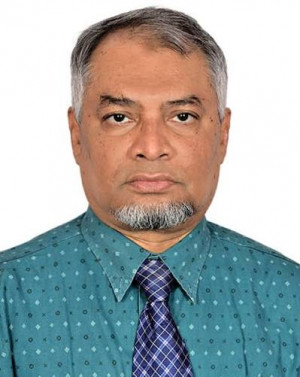
Md. Saidur Rahman, Bangladesh University of Engineering and Technology, Dhaka
Title: Reconfiguration Problems: From Real-World Applications to Hamiltonian Cycles
Abstract: Consider a communication network operating under a particular configuration. Due to changing requirements, a different configuration may become more desirable. However, switching directly to the new configuration may interrupt ongoing services. Can we transform the existing configuration into the desired one through a sequence of small changes while keeping the network operational throughout the process? This question captures the fundamental idea of a reconfiguration problem. In general, a reconfiguration problem asks whether one feasible solution can be transformed into another through a sequence of permitted local operations, while maintaining feasibility at every intermediate step. Such problems arise naturally in communication networks, robot motion planning, scheduling, and resource allocation. Reconfiguration problems have been studied for various combinatorial structures, including graph colorings, independent sets, matchings, spanning trees, and Hamiltonian cycles. In this talk, we begin with real-world motivations and introduce the fundamental concepts and algorithmic challenges of reconfiguration problems. We then turn our attention to Hamiltonian cycles in rectangular grid graphs. In particular, we present our recent results on the reconfiguration of even 2-complex Hamiltonian cycles. We investigate their structural properties and characterize their possible configurations through a collection of patterns. Based on this characterization, we develop an algorithm that transforms an even 2-complex Hamiltonian cycle into a 1-complex Hamiltonian cycle using local operations. By combining this transformation with an existing reconfiguration algorithm for 1-complex Hamiltonian cycles, we establish that any two even 2-complex Hamiltonian cycles can be reconfigured into each other. We conclude by highlighting the significance of these results and discussing directions for future research.
Bio: Dr. Md. Saidur Rahman, a professor of Bangladesh University of Engineering and Technology (BUET) and a fellow of Bangladesh Academy of Sciences, is a renowned researcher in the field of graph algorithms and is regarded as an authority on graph drawing algorithms. He has more than 140 publications on algorithms and graph theory in internationally reputed journals and conferences. He has developed many efficient algorithms for finding drawings for planar graphs which have enormous applications in VLSI layout automation, software engineering, DNA recognition, etc. His graduate textbook “Planar Graph Drawing,” written with renowned computer scientist Professor Takao Nishizeki, is considered as the most valuable pioneering work in planar graph drawings. He has co-edited five volumes of the LNCS series of Springer and served as guest editor for several reputed journals including Algorithmica and Theoretical Computer Science. Currently, he is on the editorial board of several international journals, including the Journal of Graph Algorithms and Applications and the International Journal of Foundation of Computer Science. His undergraduate textbook “Basic Graph Theory” which has been published by Springer has received around 75,000 downloads within eight years. Professor Rahman is leading an enthusiastic research group in Graph Drawing and Information Visualization Laboratory of CSE Department, BUET. He has supervised four Ph. D. theses and 27 M. Sc. Engg. theses. He is a recipient of “BAS Gold Medal 2003” in the junior group, “UGC Award 2004” and the prestigious “Funai Information Technology Award for Young Researchers 2004.” Prof. Rahman is a founder of the International Conference and Workshops on Algorithms and Computation (WALCOM) which has appeared as a very prestigious international venue of theoretical computer science over the years. Professor Rahman worked as a member of expert panels of various national and international bodies. He served as a member of Board of Accreditation for Engineering and Technical Education (BAETE), Bangladesh which is a full signatory of Washington Accord for several years. In BUET administration, he showed excellent administrative capabilities as the Registrar, the Director of Institutional Quality Assurance Cell (IQAC) and Head of CSE Department of BUET. On deputation from BUET, he served University Grants Commission of Bangladesh (UGC) as a full-time member. He is an ACM Distinguished Speaker and named as 2024 ACM Distinguished Member.
Keynote Speaker
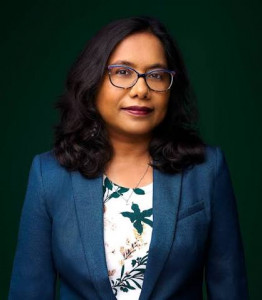
Israat Haque, Dalhousie University, Canada
Title: Hunting Stealthy Lateral Movement with Network Programmability
Abstract: Perimeter defenses such as firewalls and intrusion detection systems are built to control traffic entering and leaving a network, while communication among internal hosts is largely trusted. Advanced persistent threats exploit this trust through pivoting, where an attacker compromises an internal host and relays traffic through it to reach better-protected targets deeper inside the network. The relayed traffic blends in with normal activity because it originates from a legitimate internal address. Existing defenses analyze traffic offline, require agents on every device, or depend on network-wide cooperation, making them impractical in Internet of Things, bring-your-own-device, and cloud environments. This keynote shows how network programmability can make this stealthy threat visible in real time. It presents two systems that address the problem from complementary vantage points. Spotlight runs on a P4-programmable switch and correlates incoming and outgoing flows by size and timing at line rate, protecting every connected host without any end-host cooperation. Stitch moves into the host kernel with eBPF, linking network flows to the processes that serve them so it can reliably separate genuine pivoting from benign traffic that looks similar, while adding negligible overhead to the protected host. They reveal that broad network visibility and rich host context are both needed to catch stealthy pivoting. The talk concludes by discussing how the two can be combined for layered, real-time defense against lateral movement.
Bio: Dr. Israat Haque is a Professor in the Faculty of Computer Science at Dalhousie University and the Director of the Programmable and Intelligent Networking (PINet) Lab. Her work applies network programmability, system-level monitoring, and data-driven techniques to strengthen the security, reliability, sustainability, and performance of telecommunications networks, IoT platforms, and AI-enabled systems, particularly in complex and dynamic environments. Dr. Haque has been recognized for both technical leadership and impact. She was named an ACM/IEEE N2Women Rising Star (2021) and received Digital Nova Scotia’s Thinking Forward Award (2022) for developing highly skilled technology and security talent. In 2024, she received the Alumni Award from the University of Alberta. She is an active contributor to the IEEE and ACM research communities.
Keynote Speaker
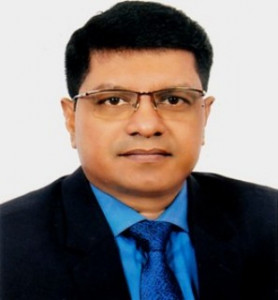
Md. Abdur Razzaque, Dhaka University
Title: Split Learning for Privacy-Aware Smart City Applications
Abstract: The rapid advancement of Artificial Intelligence (AI), Internet of Things (IoT), and edge computing is transforming urban environments into intelligent, interconnected smart cities. However, collaborative AI applications, particularly in smart healthcare, face significant challenges involving data privacy, computational heterogeneity, communication overhead, and scalability. Split Learning (SL) has emerged as a promising privacy-aware distributed learning paradigm that enables collaborative model training without sharing raw sensitive data. Nevertheless, conventional SL suffers from sequential training delays, non-independent and identically distributed (non-IID) data, and resource constraints.
This keynote explores recent advances in SL, emphasizing parallel learning, data distribution-aware clustering, and intelligent resource optimization. It highlights our recent research employing Deep Reinforcement Learning to address data heterogeneity and improve collaborative training efficiency in healthcare applications. Furthermore, it examines emerging research challenges involving adaptive model partitioning, privacy leakage, adversarial robustness, communication efficiency, and trustworthy AI. Finally, the keynote discusses future opportunities for integrating SL with Digital Twins, Agentic AI, edge intelligence, and emerging 6G networks to enable secure, scalable, and sustainable AI-driven smart-city applications.
Bio: Md. Abdur Razzaque is a Professor of the Dept. of Computer Science and Engineering, University of Dhaka and the current chairman of the Department. He chaired 2021 and 2020 Executive Committees for IEEE Computer Society Bangladesh Chapter. He received his BS in Applied Physics and Electronics and MS in Computer Science from University of Dhaka, Bangladesh in 1995 and 1996, respectively. He obtained a PhD in Computer Engineering from Kyung Hee University, South Korea in 2009. He worked for Green University of Bangladesh for different periods as Pro Vice Chancellor, Dean of Faculty of Science and Engineering and Chairperson, Dept of CSE during 2016-2021. He was a research professor at Kyung Hee University, South Korea during 2010-2011. He worked as a visiting professor in Stratford University, Virginia, USA in 2017. He is the director of Green Networking Research Group of the Dept. of CSE, DU. He has been promoting Outcome Based Education for Science and Engineering Faculties of leading universities of the country. He led many national and international funded research projects. His research interest is in the area of Applications of AI and Machine Learning in optimization of wireless networking protocols and architectures, Mobile Crowdsourcing, Sensor Data Clouds, Internet of Things, Edge and cloud Computing, etc. He has published 195+ research papers in peer-reviewed conferences and journals. He has been recognized as the top 2% scientists of the world (2025), published by Stanford University and Elsevier. He is offering editorial services to reputed journals and contributing to numerous international conferences at different capacities. He is a senior member of IEEE, member of IEEE Computer Society, Internet Society (ISOC), etc.
Keynote Speaker
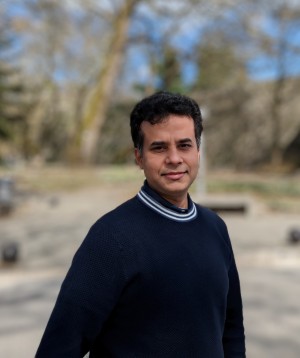
Mohammed Eunus Ali, Monash University, Australia
Title: From Spatial Reasoning to Urban Agents for Sustainable Cities
Abstract: Cities are where the challenges of decarbonisation, mobility and energy meet, and almost every decision about them is spatial: where to build, how to move, what to connect. Urban computing has long turned city-scale data into insight, and spatial digital twins now fuse live sensing, historical records and simulation into a working picture of the city. Yet these systems answer only the questions they were designed for. Large language and vision-language models promise something different: systems that take open-ended questions, reason over maps, imagery and the physical world, and act on the answers.
This talk asks how far that promise holds. I begin with the applications that motivate it, from everyday location-based decisions to city-scale planning. I then share what we have learned from systematically evaluating foundation models on geospatial, urban and spatial reasoning tasks: they read places well, but they reason about space poorly, and they fail in specific, predictable ways. Next, I show how agentic designs narrow this gap by grounding models in tools, structured spatial representations and collaboration between agents. Finally, I argue that the digital twin should become the executable environment in which urban agents reason, act and are evaluated, and I outline open problems in building safe, controllable agentic systems for sustainable cities.
Bio: Dr. Mohammed Eunus Ali is Director of the Monash Urban Computing Lab, Faculty of Information Technology at Monash University. He received his PhD in Computer Science and Software Engineering from the University of Melbourne in December 2010. Following his doctoral studies, Dr. Eunus held full-time academic positions at the Bangladesh University of Engineering and Technology (BUET), the premier technical university in Bangladesh. At BUET, he served as a Professor and led a research group specializing in Data Science and Engineering for over a decade. Dr. Eunus has also held research positions at leading Australian institutions, including Monash University (2015, 2021-2022), Swinburne University of Technology (2019-2020), the University of Melbourne (2012-2013), and RMIT University (2016). In these roles, he contributed to advancing research in his field through collaborations and innovative projects. The outcomes of Dr. Eunus’s research have been published in prestigious venues such as ICLM, ICLR, ACL, TKDE, Information Systems, ICDE, and PVLDB. His contributions have been recognized with several awards, including the Bangladesh University Grants Commission Award (2012), ADC Best Poster Award (2016), SSTD Best Demo Award (2017), and ADC Best Paper Award (2022). Dr. Eunus has also served as a Program Committee Member for renowned conferences, including ICML, ICLR, AAAI, ACL, SIGMOD, VLDB, ICDE, and SIGSPATIAL, reflecting his active engagement in the research community. He is currently a Senior Member of the ACM.
His research focuses on data management, analytics, and learning, with a particular emphasis on spatiotemporal data, geosocial networks, and multimodal, high-dimensional data. These areas form the foundation for developing innovative applications in spatial and urban intelligence, intelligent transportation systems, and smart, sustainable cities. In recent years, his work has expanded to explore the role of Generative and Agentic AI, leveraging large language models (LLMs) and autonomous agents, to advance geospatial query processing, urban computing, digital twins, and automated data engineering.
Invited Speaker
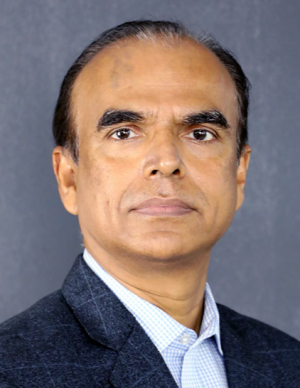
Shahadat Khan, TallyKhata, Bangladesh
Title: Fintech in Bangladesh: Progress, Challenges and the Road Ahead
Abstract: Bangladesh has made significant progress in digital financial services, though not yet at the scale the country needs. Drawing on 16 years of experience in this sector, I will share where we have moved ahead, where we still lag, and what opportunities lie ahead.
Banks run on core banking systems, MFS has made sending money and paying bills easy nationwide, and NPSB connects banks and MFS accounts. This year, Bangla QR and low-cost interoperable payments have opened new possibilities. But the gaps are still large. Most everyday transactions are still in cash, and non-performing loans have crossed 33%, mainly because of weak credit assessment and poor governance. We still have very little data-driven lending, and our dependence on foreign technology raises questions of financial sovereignty. I will also look at what we can learn from China’s technology-led approach and India’s digital public infrastructure model.
I will focus on three areas where technology professionals can help expand financial inclusion. First, data-driven lending, supported by a digital credit information system and consent-based data sharing. Second, cybersecurity, where banks lack skilled people and AI and quantum computing are making the problem harder. Third, building our own technology, so that banks can rely more on local companies for critical systems.
Finally, I will discuss how researchers, technology professionals, financial service providers and regulators can work together to build a more inclusive and secure financial system for Bangladesh.
Bio: Dr. Shahadat Khan is the Founder and CEO of TallyKhata, a leading fintech and the #1 digital platform for small businesses and shops in Bangladesh, serving around one million monthly active users. TallyKhata helps shop owners manage bookkeeping and accept digital payments through services operated under a Bangladesh Bank PSP license. TallyKhata received The Daily Star Startup of the Year Award in 2025. He is also the founder of SureCash mobile financial services, which implemented Bangladesh’s largest digital stipend disbursement program in 2017. He is a member of the Bangladesh Mathematics Olympiad Committee. Dr. Khan has 35 years of experience in teaching, research, innovation, product development, and technology solutions for social impact. Earlier, he served as CTO of Eyeball Networks, Canada, working with global customers including Intel, Polycom, FujiFilm, Comcast, and Philips. He graduated from BUET, was a Canadian Commonwealth Scholar, and received his Ph.D. in Computer Engineering from the University of Victoria, Canada. He holds 16 patents, has published widely, speaks frequently at industry forums, has traveled to more than 40 countries, and is a hobbyist wildlife photographer. He may be contacted at shahadat@tallykhata.com.
Invited Speaker
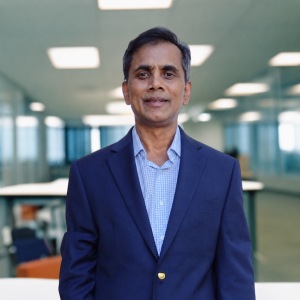
Mohammad Kamrul Islam, Uber, USA
Title: DataK9: GenAI-Driven Data Discovery & Classification at Exabyte Scale
Abstract: Manual data classification is slow, expensive, and often inaccurate. Yet enterprises still rely on it to identify sensitive data such as PII, PCI, and PHI across massive data ecosystems. At Uber, with over two exabytes of data spanning more than seven platforms, we built DataK9, a GenAI-powered solution that automates data discovery and field-level classification at scale. This talk explores the system architecture, key design decisions, and lessons from production, including how GenAI-driven automation improves classification accuracy, reduces security risks, and strengthens regulatory compliance.
Bio: Dr. Mohammad Kamrul Islam is a software and big data expert with over 20 years of experience designing and building large-scale distributed systems, cloud platforms, AI-driven infrastructure, and enterprise security solutions. He currently works at Uber and previously held engineering roles at LinkedIn and Yahoo. He earned a Ph.D. in Computer Science from The Ohio State University and a B.S. in Computer Science and Engineering from BUET. He is the co-author of the O’Reilly book Apache Oozie: The Workflow Scheduler for Hadoop and is recognized for his expertise in distributed computing, cloud technologies, AI, data governance, and privacy